A fake part fails at speed.
Counterfeit brake pads, filters and fluids look like the original in the box. The difference shows up on the road. A copy-evident code lets the dealer, the mechanic and the driver check the part before it goes on the car – with any phone.
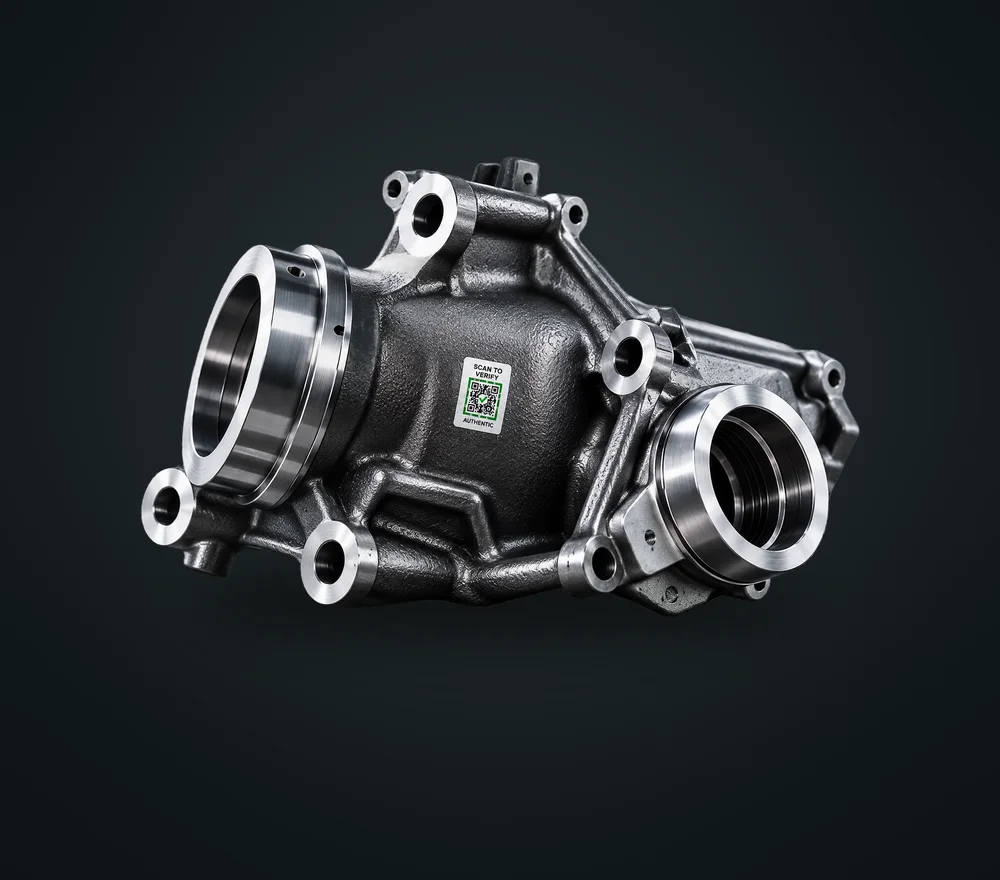 AI-generated
1.5 million fake parts seized for one carmaker in a single year.
793 raids with customs in 2024. Among the seized goods: brake pads containing lead and arsenic, and air filters made of highly flammable material. Source: Mercedes-Benz, reported by Securing Industry.
What a copy costs you here.
Brake pads, filters and steering parts are copied down to the packaging. The material inside is where the copy saves money.
✓The mechanic checks the part before it is fitted, not after it fails.
Oils, additives and brake fluids are poured, not inspected. A refilled or reprinted container passes every visual check.
✓A reprinted code still scans as a code, but fails the check.
A failed copy comes back as a claim, with a receipt that looks legitimate.
✓Warranty is granted once per verified serial, so copies cannot claim it.
When a copied part fails, the workshop and the driver see your name on it.
✓Every check is counted, so you see where your genuine parts were verified – and where copies show up.
A check only experts can do is a check most buyers never get.
Many spare-part labels today combine a hologram with a brand app, or can only be verified by trained staff. That keeps the check at the parts counter. The driver has to trust it.
Stock is checked before it reaches the shelf. A code that fails is a supply problem you catch while the pallet can still go back.
One scan with the phone camera, about a second. Fast enough to happen with a car on the lift – offline with the authentic app.
No app for the first check, no account, no special reader. The same answer for everyone who holds the part.
One code. Everything after the sale.
The mark that proves a part is genuine also carries its serial number – so protection, warranty and workshop loyalty run on the same scan.
Registered against a verified serial, once per part. Copies and repeat claims fall out.
Points and dealer levels for every genuine part a workshop fits. Dealer loyalty brings 5–15 % additional revenue (source: authentic.network).
From 18 February 2027, EV and industrial batteries in the EU need a digital passport. The same code can open it.
Proven on 40 million products a year.
LIQUI MOLY puts a copy-evident code on every oil canister lid – checked by workshops and drivers in more than 150 countries. Read the case study
What automotive brands switch on first.
See the check on your own part.
Send us the part that gets copied most. We show you the mark on it and what a mechanic would see in the workshop.
Real impact.
About automotive.
Which automotive products get counterfeited most?
Parts and fluids that are bought again and again and are hard to judge by eye: brake pads, filters, spark plugs, wiper blades, oils, additives and brake fluids. They are cheap to imitate visually, they move through several hands before they reach a workshop, and the difference between a copy and the original only shows once the part is in use.
How does authentic.network protect automotive parts?
authentic.network gives every part or container a copy-evident code with its own serial number. Dealers, mechanics and drivers check it with a smartphone in about a second; the first check needs no app, and with the authentic app it also works offline. A copy fails. LIQUI MOLY protects around 40 million products a year this way, checked in more than 150 countries.
How is this different from a hologram label?
Many spare-part labels combine a hologram with a brand app, or can only be verified by trained staff. That keeps the check with experts. A copy-evident code carries the security in the print itself: a reprint still scans as a code but fails, and any phone camera checks it in about a second – the dealer, the mechanic and the driver.
Does the mechanic need an app or a reader?
No. The phone camera reads the code and opens a page – no app, no account, no special reader. With the authentic app, verification also works offline, which matters in workshops and warehouses with poor coverage.
Can each part carry its own serial number?
Yes. Each mark carries a serial number that can be linked to article number, batch, production date and intended market. Warranty, grey-market checks and the scan history then attach to the individual part.
Can we stop warranty claims on copied parts?
Yes. Warranty is registered against a verified serial number, once per unit. A copy fails the check, and the same serial cannot be claimed twice.
Is the code ready for the EU battery passport?
The same mark carries a serial number and can open a Digital Product Passport. From 18 February 2027, EV and industrial batteries placed on the EU market need a battery passport; protection and passport can come from one code instead of two suppliers.
Can the code go on small parts and on containers?
Yes. The code comes as a sticker we print and deliver, or integrated into your label artwork. It works on a canister lid, on a parts box and on the part itself, where space allows.